Printing Custom Grip Sleeves for Crutch Handles That Don't Slip
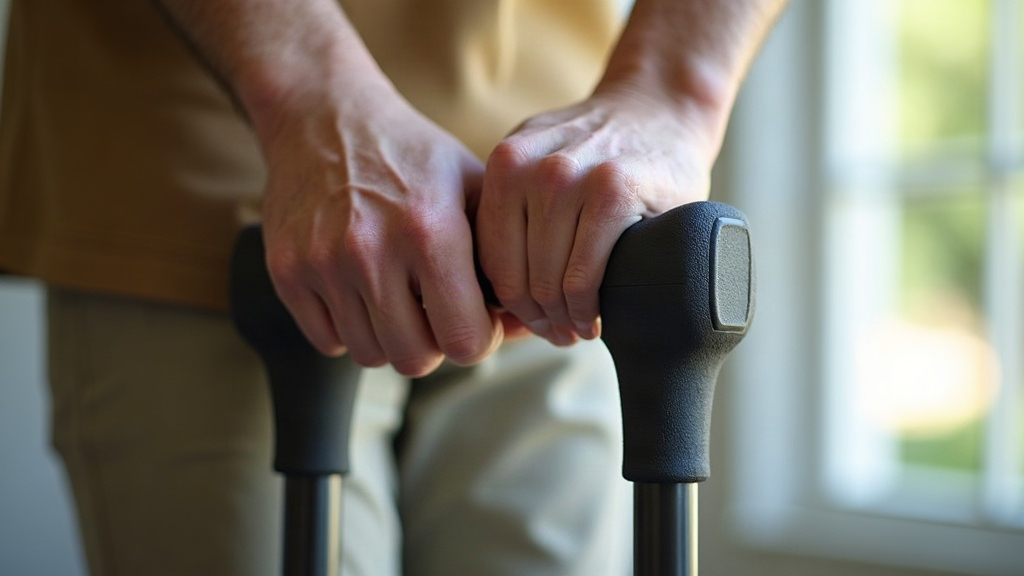
Printing custom grip sleeves for crutch handles that won’t slip when wet is one of those small projects that pays off way more than its size suggests. Factory-standard foam grips look fine sitting in a dry living room, but the moment hands sweat, rain starts coming down, or someone’s gripping with a bandaged palm, things get slick fast. A well-designed 3D-printed sleeve, made from the right material with the right texture, fixes this problem for good. And it costs a fraction of what commercial “ergonomic” replacement grips charge.
Why Stock Crutch Grips Fail in Wet Conditions
Most crutches ship with closed-cell foam or smooth rubber grips. Dry, they’re adequate. But they share two weak points:
- Smooth molded surfaces that depend on friction from dry skin contact. That friction vanishes the moment a thin film of moisture forms between hand and handle.
- Foam that compresses and glazes over time, flattening out whatever micro-texture it had when new.
For anyone using crutches outdoors, living in a humid climate, or recovering from an injury (when sweating is just part of the deal), this isn’t a minor annoyance. It’s a real fall risk.
Choosing the Right Material
Material matters more than geometry here. You can design the fanciest texture in the world, but if the plastic itself doesn’t grip when wet, none of it matters.
- TPU (Thermoplastic Polyurethane), Shore 85A-95A — flexible, rubbery, genuinely tacky once it gets damp. This is the go-to choice for grip sleeves, and for good reason.
- TPE — softer and cushier than TPU, better for pressure relief on sensitive palms, but it gives up a bit of wet-grip performance in exchange.
- PETG or PLA — fine as a rigid inner shell under a soft overlay, but neither one grips worth anything on its own when wet.
If your printer fights you every time you load flexible filament, there’s a workaround: print a rigid PETG core sleeve, then glue or press-fit a separate silicone or TPU sleeve over it. A lot of makers find this two-piece approach way more forgiving than trying to print pure TPU directly onto a curved handle shape, where stringing and layer adhesion issues tend to pile up.
Designing a Sleeve That Actually Grips When Wet
Smooth TPU by itself isn’t enough. Texture is what actually channels water away from the contact points, the same way tire tread works on a wet road.
Texture patterns that work well
- Directional ridges (chevron or herringbone) angled to match the natural rotation of the hand, pushing water outward instead of letting it pool.
- Diamond knurling, the kind you see on tool handles, which creates dozens of small high-pressure contact points.
- Raised dot/pimple pattern — easy to model in any CAD software and surprisingly effective at breaking up a water film.
Design tips
- Keep texture height between 0.8mm and 1.5mm. Enough to bite into the palm, but not so aggressive it starts digging in uncomfortably on a two-mile walk.
- Add at least 2-3mm of wall thickness so the sleeve holds up under daily compression instead of collapsing after a few weeks.
- Model the inner bore as a slightly undersized cylinder, about 0.3-0.5mm smaller than the measured handle diameter. That way the flexible TPU stretches on and stays put, instead of spinning loose on the handle.
- Add a small lip or step at each end of the sleeve. Without it, the sleeve will slowly creep up or down the shaft every time you set the crutch down.
Print Settings That Matter
- Slow down to 25-35mm/s for TPU. Rushing it causes stringing and under-extrusion, and you’ll lose the fine texture details that make the grip actually work.
- Use 100% infill if the walls are thin and rely on thread strength; if the walls are over 3mm, 30-40% infill is plenty.
- A direct-drive extruder makes life much easier with flexible filament. A Bowden setup isn’t impossible, but expect more tuning and more failed prints along the way.
Fitting and Testing
Don’t jump straight to a full production run. A few quick checks save a lot of wasted filament:
- Measure the actual handle diameter with calipers at several points along its length. Many handles taper slightly, and a single measurement near the top can throw off the whole fit.
- Print a short 20mm test ring first to confirm the fit tolerance before committing to the full-length sleeve.
- Run a wet-grip test: wet your hands or the sleeve surface, then simulate the actual gripping motion used while walking. A static squeeze test tells you almost nothing about real-world performance.
Conclusion
A custom-printed, textured TPU grip sleeve solves the exact problem stock crutch handles create: traction disappearing right when you need it most. Pick a tacky, flexible material, add directional texture, and dial in the fit to the handle’s real diameter, and you end up with a sleeve that stays secure through rain, sweat, or sticky summer humidity. It’s a small project, honestly a weekend’s worth of work at most, but the payoff in everyday safety and confidence is anything but small.