PETG vs TPU for Stair Nosing Edge Protectors on Carpeted Steps
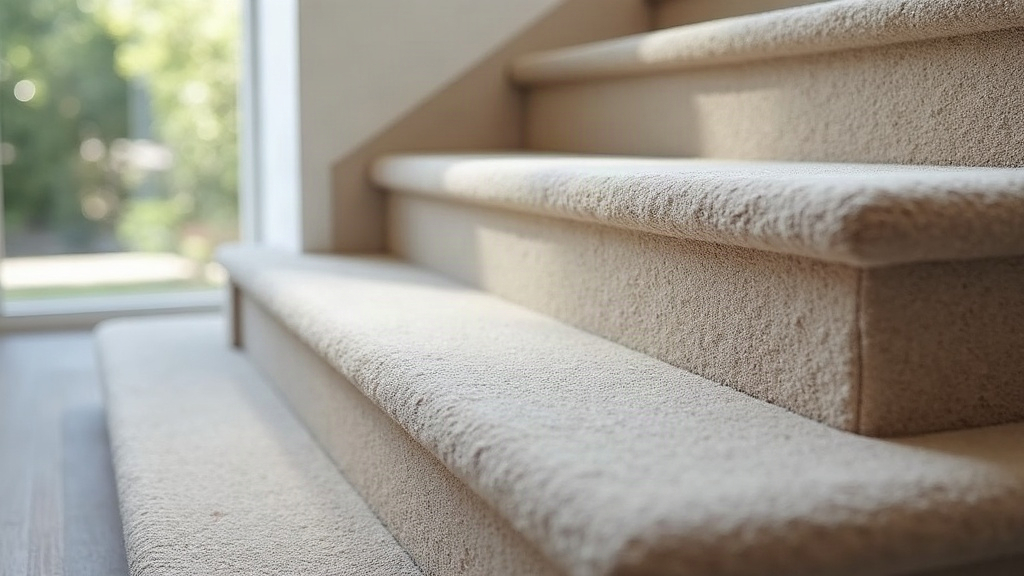
If you’re torn between PETG and TPU for stair nosing on carpeted steps, here’s the quick version: TPU wins on safety and durability when carpet’s involved, PETG wins on rigidity, price, and print speed when the nosing meets a hard transition edge. Carpeted stairs give a little underfoot, so the material needs to absorb impact and grip without snapping. That’s TPU’s whole deal, really, that rubbery give is exactly what padded carpet calls for.
Why Stair Nosing Material Matters
The nosing covers the front edge of each step, which happens to be the part that takes the worst beating: constant foot traffic, vacuum cleaner bumps, shoes scuffing across the carpet fibers day after day. On carpeted stairs in particular, the nosing also needs to:
- Bridge the gap between the carpet pile and the hard step edge
- Flex enough that uneven footsteps don’t crack it
- Add slip resistance, since carpet by itself can bunch or shift underfoot
- Hold up at the seams for years without fraying, tearing, or lifting
Get the material wrong and you’ll either see cracked corners within a few months, or you’ll end up with nosing that feels slick and unsafe. Neither is a good outcome on a staircase.
PETG: The Rigid, Budget-Friendly Option
PETG (Polyethylene Terephthalate Glycol) is a go-to for 3D printing and general fabrication. Tough, UV-stable, and genuinely easy to work with.
Pros for stair nosing:
- Prints and forms faster and cheaper than TPU (think noticeably shorter print times on the same geometry)
- Holds a crisp, precise edge, which suits stairs that transition onto hard flooring
- Rigid enough that it won’t deform under a heavy bookshelf being dragged across it or a rolling cart
- Handles moisture and basic chemical exposure well, useful for basement stairs or entryways
Cons on carpet specifically:
- Low flex means corners can crack where the padding compresses unevenly underneath
- The harder surface gives less cushioning, so it feels less forgiving underfoot
- Doesn’t tolerate a slightly uneven tack strip or carpet edge very gracefully
PETG does best over a firm substrate, plywood, tile, low-pile commercial carpet, basically anywhere the surface below isn’t doing a lot of flexing.
TPU: The Flexible, Impact-Absorbing Choice
TPU (Thermoplastic Polyurethane) is the rubbery elastomer everyone reaches for when they need flex, abrasion resistance, and shock absorption in one material.
Pros for stair nosing on carpet:
- Moves with the carpet pile and padding instead of fighting it (and cracking)
- Grips noticeably better, which matters a lot if people are walking around in socks or barefoot
- Soaks up impact from a dropped iron, a toolbox, heavy footfalls, whatever, and that extends its working life
- Shrugs off an uneven tack strip or padding height without stress-cracking at the seams
Cons:
- Pricier, often 1.5 to 3 times what PETG costs per unit
- Slower to print or manufacture, since it flows more slowly than rigid filaments
- The softer surface can start showing compression marks after years of heavy foot traffic
- Slightly less dimensionally precise on very thin, sharp profiles
If you’ve got plush or medium-pile carpet on a residential staircase, TPU is almost always the safer bet over the long run.
Side-by-Side Comparison
| Factor | PETG | TPU |
|---|---|---|
| Flexibility | Low-medium | High |
| Slip resistance | Moderate | Excellent |
| Impact/crack resistance | Moderate | Excellent |
| Cost | Lower | Higher |
| Best substrate | Hard/firm | Carpet/padded |
| Install precision | High | Moderate |
Which Should You Choose?
- Go with TPU if your stairs have thick padding, plush carpet, or see a lot of foot or pet traffic.
- Go with PETG if budget is the main constraint, your carpet is low-pile or commercial grade, or the nosing is bridging to hard flooring rather than sitting on open carpet.
- Or split the difference: some manufacturers bond a rigid PETG core with a TPU overmold at the lip, so you get shape retention from the PETG and grip where your foot actually lands.
Installation Tips Regardless of Material
- Anchor the nosing into the subfloor itself, not just the carpet or pad. That’s where the long-term stability comes from.
- Leave a small expansion gap at the seams on multi-piece runs so they don’t buckle later.
- Clean and dry the step edge before applying adhesive-backed nosing. Skip this and you’re asking for early lifting.
Final Verdict
For most carpeted staircases, TPU is the better long-term investment. Its flexibility, grip, and resistance to cracking line up almost perfectly with what padded carpet needs. PETG still earns its place when cost is the priority or when the install surface is firm and stable. Match whichever material to your carpet’s thickness and how much traffic the stairs see, and the nosing should hold up safely for years.