ASA vs PC for Replacement Snow Thrower Chute Rotation Handles
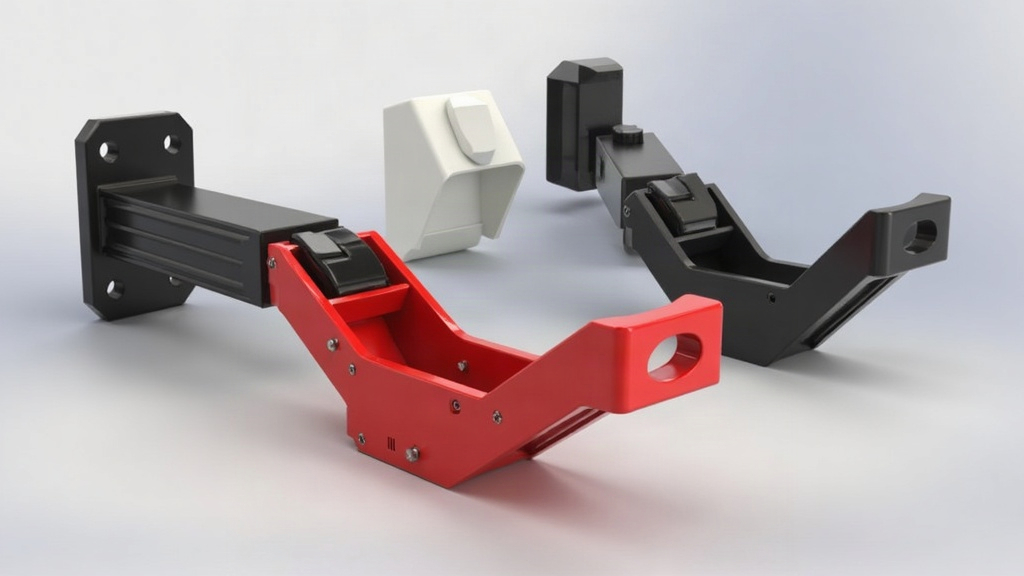
If you’re replacing a broken chute rotation handle on your snow thrower, the two most common material choices you’ll run into are ASA (Acrylonitrile Styrene Acrylate) and PC (Polycarbonate). Short version: ASA generally holds up better in real cold, UV-heavy outdoor conditions and resists cracking longer, while PC gives you higher raw impact strength but can turn brittle and stress-crack in sub-zero temps, especially in a lower-grade or 3D-printed part. For most homeowners swapping out a chute crank handle or rotation gear knob, ASA is the safer long-term bet.
Why the Handle Material Actually Matters
The chute rotation handle takes constant torque, vibration, and (this is the part people forget) extreme cold. Unlike some interior plastic bracket you’ll never see again, this piece sits right out in the weather:
- Temperatures well below freezing, often -10°F to -20°F or colder
- UV exposure from sun bouncing off snow all day
- Repeated twisting force, worse when the chute’s packed with ice
- Thermal cycling (freeze-thaw stress) all season long
A handle that feels solid in your garage at 60°F can act like a totally different piece of plastic once it’s sat outside overnight through a blizzard.
ASA: The Outdoor-Grade Choice
Think of ASA as ABS’s tougher, weather-hardened cousin. It was basically built for outdoor duty.
Strengths:
- Excellent UV stability, won’t yellow, chalk, or degrade after several seasons in the sun
- Stays flexible and impact-resistant in the cold better than standard ABS or PC
- Good layer adhesion when 3D printed, so it’s less likely to snap clean off at stress points
- Handles weathering well, a good fit for parts that live outdoors or in an unheated shed
Weaknesses:
- Slightly lower raw tensile strength than PC under lab conditions
- Tends to cost a bit more as a filament or raw material than plain ABS
PC (Polycarbonate): Strong But Temperature-Sensitive
Polycarbonate has a reputation for being nearly bulletproof at room temperature, literally: it’s the stuff used in bulletproof glass and safety goggles.
Strengths:
- Extremely high impact resistance at moderate temps
- Very rigid, holds tight dimensions well (handy for gear-tooth interfaces)
- High heat deflection point (not that it matters much for snow gear, but useful elsewhere)
Weaknesses:
- Gets noticeably brittle in extreme cold, exactly when your chute handle is under the heaviest load
- Weak UV resistance unless stabilizers are added; untreated PC yellows and weakens in sunlight
- Tends to stress-whiten and develop micro-cracks at flex points over time
- If it’s 3D printed, the layer lines can turn into failure lines the first hard cold snap
Real-World Failure Patterns
Talk to people who’ve actually replaced these handles and you’ll hear the same story over and over:
- PC handles tend to fail fast, a sharp crack or full snap mid-twist during very cold weather, usually right at the base near the mounting screw.
- ASA handles wear down slower, showing small surface stress marks before they finally give out, so you get more warning before it breaks completely.
If you’re in a place with brutal winters (Midwest, Northeast US, Canada), this gap matters a lot. If your winters are mild with the occasional dusting of snow, PC’s extra stiffness probably won’t bite you.
Cost and Availability
- OEM replacement handles (Toro, Ariens, Craftsman, Cub Cadet) are usually injection-molded from proprietary nylon or ASA-blend plastics, not pure PC.
- Aftermarket or 3D-printed replacements are where the ASA vs PC question really matters, since small shops and hobbyists print these to order.
- Expect roughly $8-$20 for an aftermarket handle, versus $15-$35 for a genuine OEM part.
Which Should You Choose?
- Choose ASA if: you’re in a cold-winter region, want the part to last for years exposed to sun and snow, and don’t want to replace it every season.
- Choose PC if: you need maximum short-term toughness, your winters are mild, and you’re fine replacing the handle again in a season or two anyway.
Quick Buying Tips
- Ask sellers directly what material a 3D-printed handle is made from. Don’t just assume ASA or PC.
- Look for reinforced ribbing at the base, no matter which material you go with.
- Store the snow thrower in a garage instead of leaving it fully exposed. It stretches the life of either plastic.
Conclusion
For something that lives outside and gets cranked hard in freezing temps, ASA is simply the more forgiving, longer-lasting pick for a snow thrower chute rotation handle. PC can do the job fine in a mild climate or as a stopgap fix, but if you want a handle that survives several winters without splitting, ASA is worth the extra few dollars.