Best Filament for Replacement Roller Wheels on Vintage Luggage
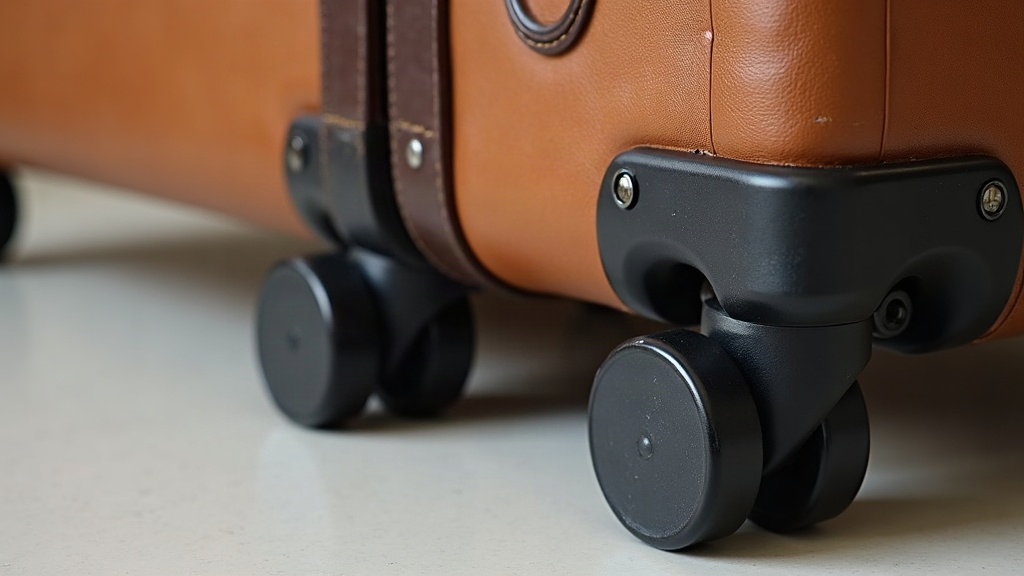
If you’re trying to breathe new life into a cherished vintage suitcase, the biggest obstacle is almost always the wheels. They crack, flatten, or just crumble with age, usually right when you need them most. The best filament for replacement roller wheels on vintage luggage is TPU (thermoplastic polyurethane) for impact absorption and quiet rolling, or nylon (PA) when you need maximum abrasion resistance and load capacity. Standard PLA and even PETG fall short here, because wheels take constant friction, weight, and sudden impacts on pavement, cobblestones, and airport floors.
This guide breaks down exactly which filament to choose, why, and how to print wheels that actually survive daily use.
Why Wheel Filament Choice Matters So Much
Luggage wheels aren’t a decorative part. They’re a high-wear component that takes:
- Repeated impact from curbs, stairs, and uneven sidewalks
- Sustained compressive load from the weight of packed suitcases
- Abrasive friction against concrete, tile, and asphalt
- Temperature swings, especially in checked baggage holds or hot trunks
Print wheels in a rigid, brittle material like standard PLA and you’re almost guaranteed cracking within weeks, sometimes days if the case gets dragged over gravel or dropped off a curb a few times. Choosing the right filament upfront saves you from reprinting the same part over and over.
Top Filament Picks, Ranked
1. TPU (Shore 85A–95A) — Best Overall Choice
TPU is flexible, highly impact-resistant, and absorbs shock the way rubber does, which is exactly what the original wheel material was probably trying to achieve in the first place. A Shore hardness of 90A–95A strikes the right balance: firm enough to roll smoothly, soft enough to not crack on impact.
Pros:
- Excellent shock absorption
- Quiet rolling, closer to the original wheel feel
- Resists cracking from cold or sudden drops
Cons:
- Slower to print (needs reduced speed, and a direct-drive extruder works best)
- Can wear faster than nylon under heavy abrasive loads
2. Nylon (PA6, PA12, or PA-CF) — Best for Heavy Loads
If your vintage case carries serious weight, or you just want a wheel that outlasts the suitcase itself, nylon is the strongest option on this list. Carbon-fiber-reinforced nylon (PA-CF) adds even more rigidity and wear resistance, though it gives up a bit of grip in exchange.
Pros:
- Outstanding abrasion resistance
- High load-bearing capacity
- Long-term durability outdoors
Cons:
- Hygroscopic, meaning it must be dried before printing or the parts turn brittle
- Requires a hardened nozzle if you’re using CF-reinforced variants
- Higher print temperatures (240–270°C), and an enclosed printer helps a lot
3. PETG — A Budget Middle Ground
PETG isn’t ideal, but it’s a reasonable compromise if you don’t have a TPU or nylon setup ready to go. It’s tougher than PLA and handles moisture fine, though it won’t absorb shock like TPU or shrug off wear like nylon.
Use PETG only if:
- The suitcase is lightly used (think display piece, or the occasional weekend trip)
- You don’t have access to flexible or engineering filaments
What to Avoid
- Standard PLA/PLA+: too brittle, cracks under impact within days
- ABS: better than PLA but prone to layer splitting under repeated stress, plus it stinks up the room while printing
- Silk or wood-filled PLA variants: look great on a shelf, fall apart under load. Skip them entirely for structural wheel parts
Design Tips for Longer-Lasting Wheels
- Print wheels solid or near-solid (80–100% infill). This isn’t the part to cut corners on filament.
- Use a gyroid or honeycomb infill pattern if you do drop the infill percentage, for more even stress distribution.
- Orient the print so layer lines run perpendicular to impact force, not parallel. That one change alone prevents a lot of delamination right at the contact point.
- Add a thin TPU tread over a nylon core (dual-material or a glued hybrid) to get the best of both: nylon’s backbone with TPU’s cushioning on top.
- Match the original axle bore diameter precisely. Measure with calipers, not a ruler or a guess. Vintage luggage hardware almost never follows a standard size.
Quick Decision Guide
| Priority | Best Filament |
|---|---|
| Shock absorption, quiet rolling | TPU 90A–95A |
| Heavy loads, max durability | Nylon (PA6/PA12) |
| Budget fix, light use | PETG |
| Avoid entirely | PLA, ABS, decorative filaments |
Conclusion
For vintage luggage roller wheels, TPU and nylon are the clear winners. Go with TPU when cushioning and quiet performance matter most, and nylon when durability and load capacity are the priority. Skip PLA and ABS unless the suitcase is purely for display. Get the filament right, print it solid, measure that axle properly, and your replacement wheels can easily outlast the ones that came with the case, keeping it rolling for years to come.